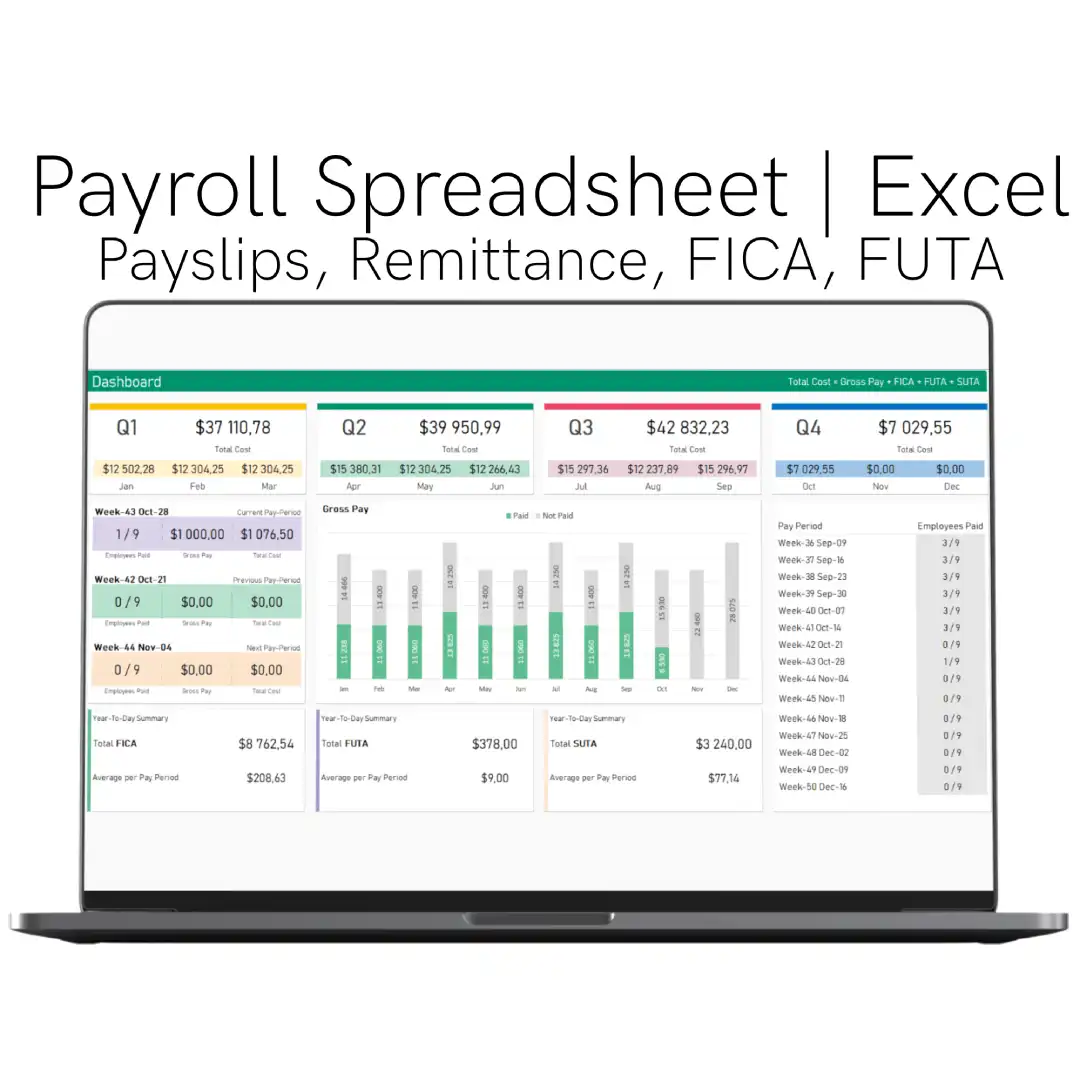

I remember my first few years handling payroll for a mid-sized agency. We were exporting raw CSV files from our time-tracking software and manually formatting them in Excel every single pay period. It was a tedious, error-prone mess. When I finally discovered a well-organized 19+ Excel Payroll Templates Collection Csv bundle, it completely shifted how I approached wage calculations. Instead of building validation rules from scratch, I could just map our raw export data directly into a pre-formatted, formula-driven worksheet. It saved hours of manual review.
Why a 19+ Excel Payroll Templates Collection Csv Is Essential
Here's the thing: most accounting software handles standard payroll just fine, but it usually struggles with unique deductions, bespoke commission structures, or one-off bonuses. That's where Excel shines. By using a structured CSV import template, you bypass the rigid limitations of SaaS platforms. You get total control over your gross-to-net calculations.
When I tested various free payroll spreadsheets over the years, I noticed a common pattern. The ones that actually worked weren't just blank grids. They contained built-in tax logic, drop-down lists for pay codes, and automated overtime calculators. A reliable payroll register needs to handle varying tax jurisdictions without breaking.
Comparing Common Payroll Spreadsheet Types
Not all templates are created equal. Depending on your operational needs, you might need a simple hourly calculator or a complex multi-state tax sheet. I've broken down the most common types you'll find in a comprehensive collection.
| Template Type | Best Used For | Difficulty |
|---|---|---|
| Basic Hourly Payroll | Single-state small teams with simple overtime | Beginner |
| Salary Plus Commission | Sales teams needing blended gross pay | Intermediate |
| Multi-State Tax Calculator | Remote teams with varying state tax brackets | Advanced |
Evaluating a 19+ Excel Payroll Templates Collection Csv
That said, downloading a random bundle from the internet can be risky. I always look for a few critical components before integrating any spreadsheet into our financial workflow. A proper collection should offer a few distinct variations:
- Data validation rules to prevent text from entering numerical fields.
- Protected formula cells so users cannot accidentally overwrite a critical SUM or VLOOKUP function.
- Clear CSV mapping instructions to ensure your raw time-clock data populates the correct columns.
⚠️ Note: Always test a new payroll template using dummy data for a full pay cycle before running actual employee wages. A single broken formula can cascade into massive compliance issues.
In my experience, the collections that offer a mix of standard weekly, bi-weekly, and semi-monthly schedules provide the most long-term value. You don't want to be stuck modifying a bi-weekly sheet for a semi-monthly pay cycle on a tight deadline. Trust me, the math gets messy fast.
Switching to a template-driven workflow means your CSV exports from tools like ADP or QuickBooks become instantly usable. You import the raw data, let the pre-built macros or formulas do the heavy lifting, and review the final numbers. It forces a standardized process that doesn't rely on your memory of complex tax formulas.
Finding the right spreadsheet setup takes a bit of trial and error, but once you lock in a reliable format, you’ll wonder how you ever managed without it. Just remember to audit your local tax rates every January. Even the best template will fail if the underlying tax tables are outdated.
Related Terms:
- payroll calculator excel free download
- free printable payroll templates
- payroll spreadsheet template excel
- editable payroll template excel
- payroll management template excel
- payroll calculator worksheet